There is a common feeling of frustration when it comes to renovation and retrofit projects. Unfinished as-built drawings, concealed MEP systems, unforeseen site conditions, and design assumptions are crumbling as soon as construction begins.
Engineers and owners often enter a renovation site with the hope that the building will be easy to cooperate with, and find out that old systems are not documented. These unknowns cause conflicts, time slippage, project cost increases, and embittered project teams.
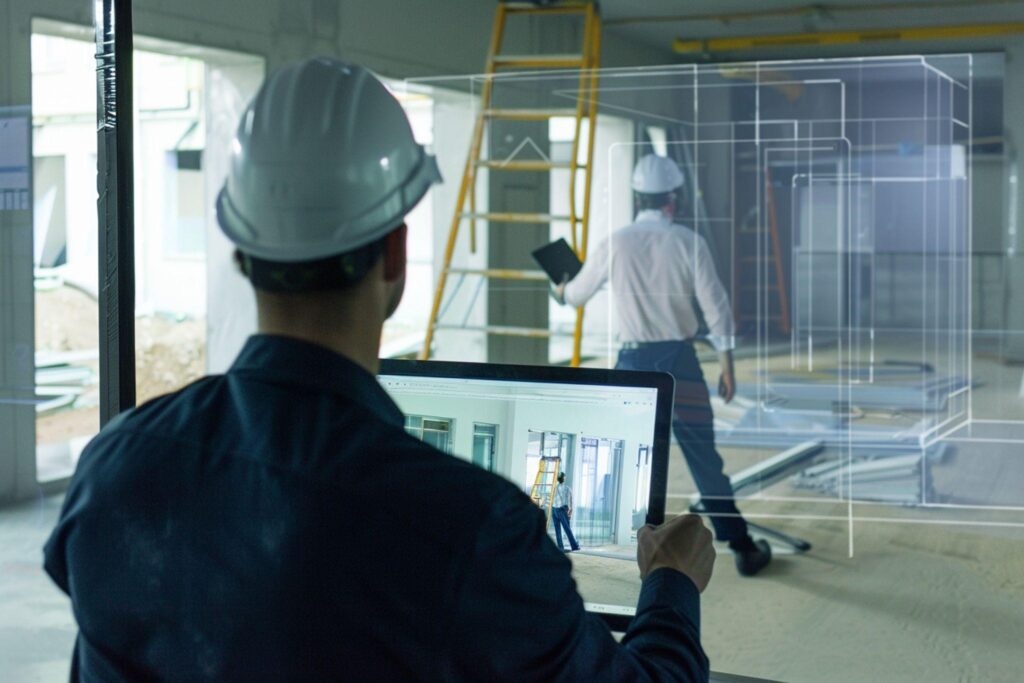
This is the point when Scan-to-BIM becomes necessary. It can be used to improve the success of MEP BIM coordination by offering a solid backbone to decision-making through capturing the real-world conditions of a building and providing a highly accurate and intelligence-rich 3D representation of the building.
Why Existing Buildings Depend on Scan-to-BIM
Current facilities are hardly accompanied by proper documentation. MEP systems get replaced, rerouted, increased, or altered over the course of decades without any record-keeping. Any minor mismatch, even the undocumented conduit, can readily disorient coordination.
Scan-to-BIM removes the guesswork. It scans all dimensions, angles, and obstructions with accuracy by high-density laser scanning.
The result is a model of the real situation of the building rather than what the old drawings indicate. In the case of design teams, this is what will act as a starting point, which will result in accuracy at each step forward.
Strengthening MEP BIM Coordination
True MEP BIM coordination requires a model that reflects reality. When relying on inaccurate or outdated drawings, clashes become inevitable.
With Scan-to-BIM, the coordination team works with a clean, verified base model that aligns with on-site conditions. It transforms how MEP systems are planned and routed.
Clash detection becomes more meaningful because engineers are coordinating against the actual geometry of the building.
This increases preconstruction accuracy, minimizes RFIs, and sharply reduces rework. It also ensures that new mechanical, electrical, and plumbing layouts fit perfectly within existing constraints. This makes installation faster, safer, and more efficient.
Dealing With Tight Spaces and Legacy Constraints
Older buildings often have congested ceiling voids, complicated mechanical rooms, and systems that have been layered on top of one another for decades.
Guessing how new systems will fit into these environments is a major source of project risk.
Scan-to-BIM provides visibility into these constraints early on. By understanding exact dimensions, offset distances, and obstructions, designers can create routing strategies that work in real space.
This allows MEP teams to confidently determine achievable system layouts while avoiding redesigns late in the project.
Improved Design Validation and Construction Planning
For architects and engineers, validating a renovation concept can be challenging when existing conditions are uncertain.
A precise Scan-to-BIM model allows project teams to examine feasibility before committing to a design. This reduces assumptions and strengthens decision-making.
This clarity is especially valuable for owners and developers managing tight budgets or strict timelines.
With accurate information, cost forecasts become more stable, material planning is simplified, and construction schedules are less vulnerable to unexpected discoveries.
Boosting Collaboration and Stakeholder Alignment
Renovation projects require close coordination between architects, engineers, MEP contractors, project managers, and ownership groups.
Scan-to-BIM acts as a central reference point that everyone can trust. A shared 3D environment reduces miscommunication, speeds up design review meetings, and aligns expectations across all parties.
When integrated with BIM services, the model becomes an interactive tool that facilitates smoother discussions between design intent and field execution.
Reducing Rework, Delays, and Cost Overruns
Unexplained site conditions are one of the most costly issues that are associated with renovation.
Scan-to-BIM has a significant impact on minimizing this risk since issues are exposed prior to the construction. By having the correct geometry and confirmed as-built information, the MEP coordination is more accurate, leading to a reduction of clashes, fewer surprises, and change orders.
This has a direct impact on less waste of labor, more predictable costs, and clear sailing on-site.
Long-Term Value for Facility Management
Owners and facility operators receive an online display of the building that can be used to aid in maintenance, equipment monitoring, and upcoming changes.
The organization can also use a living digital model to inform operations much later after the renovation is finished, instead of using random records or old-fashioned 2D drawings.
Conclusion: A Smarter, More Predictable Way to Renovate
Scan-to-BIM is reshaping how renovation and retrofit projects are delivered. Combined with powerful MEP BIM coordination services, it gets rid of uncertainty and enables project teams with the right data they require to build fearlessly.
CMLC Consulting is at your service, providing you with BIM support to upgrade your renovation or retrofit processes with reliable and high-precision BIM support.
Contact CMLC Consulting today to get expert BIM services for your new project.