What Is BIM Modeling and Why It’s Essential for Modern Construction Projects?

What Is BIM Modeling and Why It’s Essential for Modern Construction Projects?

What Is BIM Modeling and Why It’s Essential for Modern Construction Projects?

In today’s fast‑evolving construction landscape, precision, collaboration, and efficiency determine the success of a project. Building Information Modeling (BIM) has emerged as a game‑changing technology that transforms how architects, engineers, contractors, and facility managers plan, design, and execute construction projects.

At CMLC Consulting, we specialize in delivering accurate, high‑quality BIM services that support seamless project execution—from design to handover. Whether it’s Architectural BIM, Structural BIM, or MEP BIM, our solutions help clients reduce costs, mitigate risks, and boost overall project efficiency.


What Is BIM Modeling?

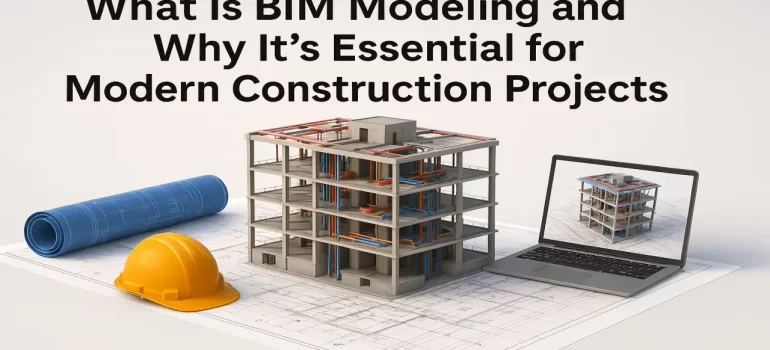
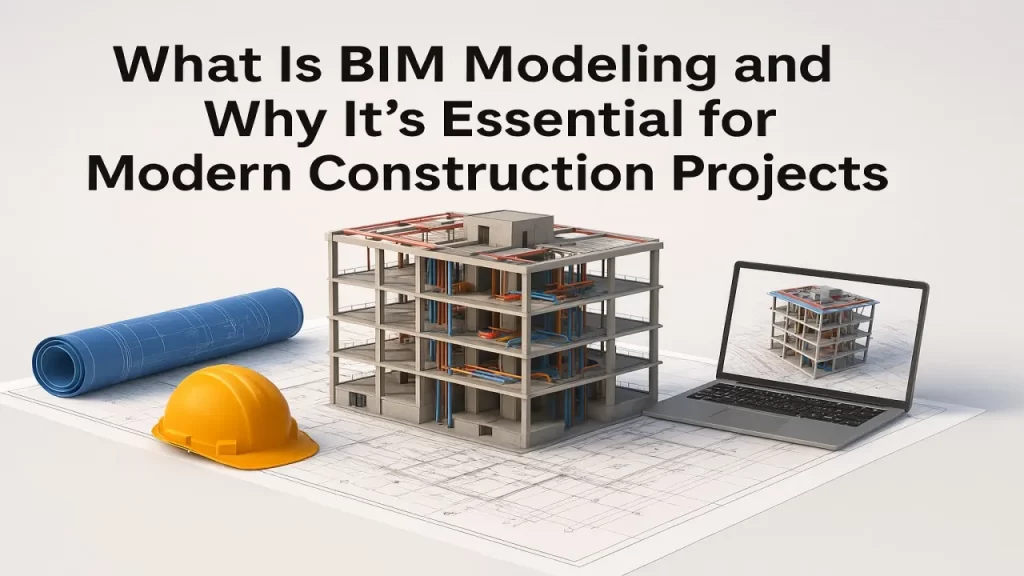
BIM (Building Information Modeling) is a digital representation of the physical and functional characteristics of a building. Unlike traditional 2D drawings, BIM creates an intelligent 3D model that includes detailed information about materials, geometry, components, and systems.

BIM is far more than a visual model—it’s a data‑rich platform that enables stakeholders to collaborate throughout the entire project lifecycle.

BIM Supports:

✔ Design & Visualization
✔ Coordination between disciplines
✔ Quantity take-offs
✔ Clash detection
✔ Scheduling (4D)
✔ Cost estimation (5D)
✔ Facility management (6D)

To explore our specialized BIM offerings, visit:
🔗 Architectural BIM Services
🔗 Structural BIM Services
🔗 MEP BIM Services


Why BIM Is Essential for Modern Construction Projects

1. Enhanced Collaboration and Coordination

One of the biggest challenges in construction is miscommunication between teams. BIM centralizes all design data into a single shared model.

At CMLC, our BIM Coordination Services help teams detect issues early, ensuring a smooth and coordinated workflow.

Benefits:

  • Fewer design conflicts
  • Real-time collaboration
  • Improved project transparency

2. Reduced Costs and Rework

Rework can account for up to 30% of construction costs. BIM drastically reduces errors by ensuring all layouts and systems fit perfectly before construction begins.

Our MEP BIM models and clash detection workflows minimize on-site issues, saving time and money.

🔗 Explore: MEP BIM Services


3. Accurate Material Quantities & Cost Estimation

Traditional quantity estimation is prone to human error, but BIM automates the process, providing incredibly accurate take-offs.

CMLC supports contractors and developers through:
🔗 MEP Cost Estimating Services
🔗 MEP Material Take-Off

Benefits:

  • Accurate BOQs
  • Better budget management
  • Reduced material waste

4. Better Visualization for Smarter Decision‑Making

3D visualization helps stakeholders understand the project clearly at every stage. This makes design review and approval much faster.

CMLC leverages cutting-edge tools to create detailed and realistic BIM models for flawless execution.


5. Improved Construction Efficiency

BIM enhances planning by integrating time (4D) and cost (5D) information. This ensures better scheduling, resource allocation, and site safety.


6. Supports Renovation & Restoration with Scan to BIM

For existing structures, BIM becomes even more essential. Our Scan to BIM Services convert point cloud data into accurate, as-built BIM models.

Ideal for:

  • Renovations
  • Facility upgrades
  • Heritage preservation

7. Stronger Workforce Through BIM‑CAD Staffing Solutions

Modern construction requires skilled BIM professionals.
CMLC supports firms through:
🔗 BIM & CAD Staffing Solutions

This ensures you have the right talent for even the most complex projects.


How CMLC Consulting Adds Value to Construction Projects

CMLC is a trusted BIM partner for architects, contractors, engineers, and developers. We combine advanced technology with highly skilled teams to deliver accurate, coordinated, and compliant BIM models.

Explore our expertise and past work:
🔗 Projects
🔗 Sectors We Serve
🔗 About Us
🔗 FAQs

For enquiries or collaborations:
🔗 Contact Us


Conclusion

BIM is no longer optional—it’s essential for modern construction. From improving accuracy and reducing costs to enhancing collaboration and enabling smarter decision‑making, BIM redefines how buildings are planned and delivered.

CMLC Consulting ensures your projects are future‑ready with best-in-class BIM services tailored to your needs.

Read More
How BIM 3D Modeling Improves Design Accuracy and Constructability

How BIM 3D Modeling Improves Design Accuracy and Constructability

How BIM 3D Modeling Improves Design Accuracy and Constructability

In the rapidly evolving construction industry, precision and efficiency are no longer optional—they are essential for delivering high‑quality, cost‑effective projects. BIM 3D Modeling has transformed the way architects, engineers, and contractors work by creating intelligent, data‑rich digital models that enhance both design accuracy and constructability.

At CMLC Consulting, our BIM experts use advanced modeling workflows to help project owners, architects, and contractors reduce errors, eliminate coordination issues, and accelerate construction timelines. Through our specialized services like Architectural BIM, Structural BIM, and MEP BIM, we support seamless design and build processes across all sectors.


⭐ What Is BIM 3D Modeling?

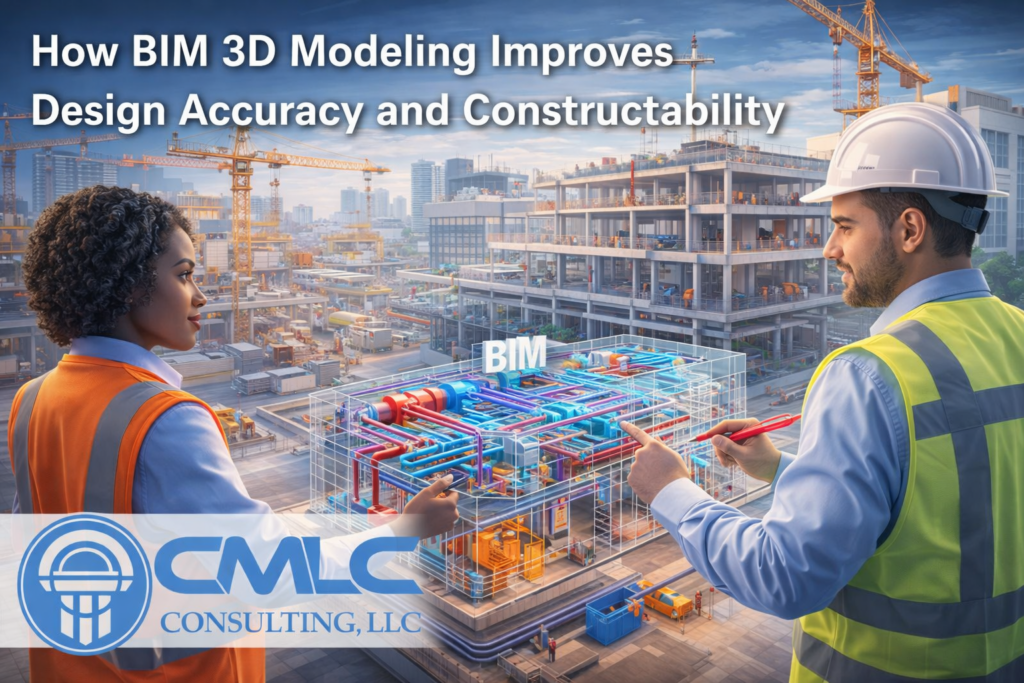
BIM 3D Modeling is the creation of a three‑dimensional digital representation of a building that includes accurate geometry and detailed information about components, materials, and systems.

Unlike 2D CAD drawings, BIM models are data‑driven, intelligent, and highly interactive—making them extremely valuable for design development, coordination, construction, and facility management.

Explore our core BIM services:
🔗 Architectural BIM Services 🔗 Structural BIM Services 🔗 MEP BIM Services


⭐ How BIM 3D Modeling Improves Design Accuracy

✔ 1. Eliminates Design Ambiguities

Traditional 2D drawings often leave room for misinterpretation.
BIM 3D models provide clear, realistic visualizations, enabling stakeholders to understand the design precisely.

CMLC enhances design clarity through detailed 3D architectural, structural, and MEP models.


✔ 2. Enables Early Clash Detection

Design inconsistencies between architecture, structure, and MEP systems often result in costly rework.
BIM detects clashes automatically—long before construction begins.

Learn more about our coordination expertise:
🔗 BIM Coordination Services


✔ 3. Supports Real‑Time Design Updates

Any modification made in the model is updated across all views and linked documents—eliminating manual errors and outdated drawings.


✔ 4. Improves Quantity Accuracy

CMLC uses BIM‑based quantity extraction to provide more accurate BOQs and cost forecasting.

Explore our estimation workflows:
🔗MEP Cost Estimating Services

🔗MEP Material Take-Off


⭐ How BIM 3D Modeling Enhances Constructability

✔ 1. Visualizes Construction Sequencing (4D BIM)

CMLC integrates scheduling data with 3D models to help contractors visualize construction activities over time—leading to better site planning and resource allocation.


✔ 2. Improves Coordination Between Trades

A federated 3D model combining architectural, structural, and MEP systems ensures all trades work with aligned information.

This reduces:

  • Rework
  • RFIs
  • Installation delays
  • Material wastage

✔ 3. Identifies Constructability Issues Early

BIM 3D models highlight problematic areas—tight spaces, access issues, routing conflicts—before reaching the field.


✔ 4. Enhances Site Safety

Through visual planning and 3D hazard identification, BIM helps contractors foresee safety risks and plan mitigations early.


✔ 5. Supports Prefabrication and Modular Construction

BIM enables precise digital fabrication models for:

  • Ducts
  • Pipes
  • Panels
  • Structural components
  • Modular assemblies

This results in higher accuracy, faster production, and lower installation costs.


⭐ BIM 3D Modeling for Renovation & Existing Structures

For renovation, retrofitting, or expansion projects, accurate existing conditions are essential.
CMLC supports this through Scan-to-BIM workflows.

Explore:
🔗 Scan to BIM Services


⭐ Industries Benefiting from BIM 3D Modeling

CMLC supports a wide range of sectors including:

  • Commercial construction
  • Residential buildings
  • Healthcare & hospitals
  • Industrial facilities
  • Educational institutions
  • Infrastructure projects

Learn more:
🔗Sectors We Serve

🔗Our Project Portfolio


⭐ Why Choose CMLC Consulting for BIM 3D Modeling?

✔ Multi‑disciplinary BIM specialists

✔ Accurate, constructible, clash‑free 3D models

✔ Advanced tools: Revit, Navisworks, AutoCAD

✔ Faster design approvals and reduced RFIs

✔ Dedicated team for Architectural, Structural & MEP modeling

✔ Support for contractors, architects & project owners

✔ Scalable BIM & CAD staffing options

Explore staffing solutions:
🔗 BIM & CAD Staffing Solutions


⭐ Conclusion

BIM 3D Modeling is a vital tool for improving design accuracy, enhancing constructability, and delivering successful construction projects. By providing realistic visualizations, early conflict detection, and coordinated multidisciplinary models, BIM helps eliminate errors and ensures smoother project execution.

As a trusted BIM partner, CMLC Consulting delivers high‑quality 3D modeling solutions tailored to your project’s needs—helping you save time, reduce costs, and achieve flawless execution from concept to completion.

For project inquiries or BIM support, visit:
🔗Contact CMLC Consulting

🔗About Us

🔗FAQs

Read More
Clash Detection in BIM: Preventing Costly Construction Conflicts

Clash Detection in BIM: Preventing Costly Construction Conflicts

Clash Detection in BIM: Preventing Costly Construction Conflicts

In the modern construction industry, even the smallest design conflict can lead to expensive delays, material wastage, and rework. As projects become more complex—with multiple disciplines working simultaneously—the risk of clashes between architectural, structural, and MEP systems increases significantly. This is where Clash Detection in BIM (Building Information Modeling) plays a critical role.

At CMLC Consulting, our clash detection workflows ensure a smooth, coordinated, and conflict-free construction process. By leveraging cutting-edge BIM tools, we help architects, engineers, and contractors identify issues early and prevent costly on-site surprises.


⭐ What Is Clash Detection in BIM?

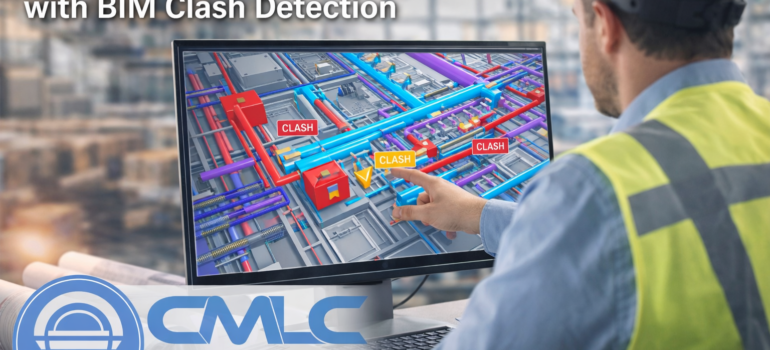
Clash detection is the process of identifying interferences and conflicts within a 3D BIM model, typically between:

  • Structural components
  • Mechanical systems
  • Electrical lines
  • Plumbing routes
  • Architectural elements

By integrating all disciplines into a single coordinated BIM model, clashes are detected automatically—far earlier than traditional 2D workflows ever allowed.

To explore how we handle multi‑disciplinary coordination, visit:
🔗 BIM Coordination Services


⭐ Types of Clashes Identified in BIM

1. Hard Clashes

Physical components intersecting or occupying the same space
Example:
A duct passing through a structural beam.

Our MEP BIM Services ensure MEP layouts are perfectly coordinated with architectural and structural frameworks.


2. Soft Clashes

Required tolerances or clearances are not met.
Example:
A pipe too close to an electrical cable or insufficient space for maintenance access.

CMLC ensures all safety and maintenance requirements are integrated into the BIM model.


3. Workflow / Sequence Clashes

Construction sequence conflicts (4D BIM).
Example:
Installing ceilings before completing overhead MEP systems.

Our team uses 4D scheduling within BIM to streamline project execution.


⭐ Why Clash Detection Is Essential in Modern Construction

✔ 1. Prevents Rework and Cost Overruns

Rework can increase project costs by up to 30%.
Timely clash detection minimizes on‑site errors and material wastage.

Explore:
🔗 MEP Material Take-Off Services 🔗 MEP Cost Estimation Services


✔ 2. Improves Project Coordination and Communication

All disciplines—architecture, structure, MEP—work on a unified model.

Check out:
🔗 Architectural BIM Services 🔗 Structural BIM Services


✔ 3. Saves Time and Accelerates Project Delivery

BIM automation detects thousands of clashes within minutes, significantly reducing review cycles.


✔ 4. Enhances On-Site Safety

Preventing layout conflicts ensures safer installation and maintenance pathways.


✔ 5. Ensures High-Quality Construction Output

With precise modeling and conflict-free installation plans, quality improves across all project phases.


⭐ How CMLC Consulting Performs Effective Clash Detection

CMLC combines technology, experience, and multi‑disciplinary knowledge to deliver accurate clash reports. Our approach includes:

🔹 Model Review & Coordination

We consolidate Architectural, Structural & MEP models to create a single federated BIM model.

🔹 Automated Clash Identification

Using advanced BIM software (Navisworks, Revit, Solibri), we detect thousands of clashes quickly.

🔹 Prioritization of Critical Issues

Not all clashes pose equal risk—CMLC categorizes them by severity.

🔹 Coordination Meetings & Issue Resolution

We guide teams through resolving clashes before construction begins.

🔹 Updated BIM Deliverables

Once all issues are resolved, a fully coordinated BIM model is delivered for site execution.

Want to see how we’ve helped industries?
🔗 Sectors We Serve 🔗 Our Projects


⭐ Benefits of Choosing CMLC for Clash Detection

  • ✔ 100% Accurate Federated BIM Models
  • ✔ Reduced Construction Delays
  • ✔ Cost Savings through Reduced Rework
  • ✔ Enhanced Multi‑discipline Collaboration
  • ✔ Faster Approvals & Fewer RFIs
  • ✔ On-site clarity with coordinated drawings

We also provide expert BIM workforce support:
🔗 BIM & CAD Staffing Solutions


⭐ Clash Detection + Scan to BIM: Perfect for Renovations

Renovation and retrofit projects require precise existing condition models.
Our Scan to BIM Services ensure real‑time accuracy, making clash detection even more reliable.


⭐ Conclusion

Clash detection is no longer optional—it’s a critical component of modern construction workflows. By identifying conflicts early and resolving them before the physical build begins, you can save time, money, and frustration.

CMLC Consulting ensures that your project benefits from world-class BIM coordination and clash detection, helping you deliver projects faster, smarter, and with unmatched precision.

For consultations or project enquiries:
🔗 Contact Us

🔗 About CMLC

Read More
BIM Coordination Services: Minimizing RFIs and Rework

BIM Coordination Services: Minimizing RFIs and Rework

BIM Coordination Services: Minimizing RFIs and Rework

In today’s construction industry, tight schedules, complex designs, and multi‑discipline collaboration often lead to misunderstandings and design gaps. These communication gaps result in RFIs (Requests for Information), unexpected clashes, and costly rework during construction.

BIM Coordination Services have become essential for eliminating design conflicts long before they reach the site. At CMLC Consulting, our coordinated BIM workflows ensure seamless communication between all stakeholders while drastically reducing RFIs, change orders, and on‑site errors.

Explore our dedicated coordination solutions here:
🔗 BIM Coordination Services


⭐ What Are BIM Coordination Services?

BIM Coordination is the process of integrating Architectural, Structural, and MEP (Mechanical, Electrical & Plumbing) models into a single federated BIM model. This unified model allows early clash detection, design validation, and streamlined communication across teams.

CMLC supports all disciplines through specialized BIM offerings:


⭐ How BIM Coordination Minimizes RFIs

RFIs primarily arise due to unclear drawings, missing details, or conflicting layouts. BIM resolves this by creating a single source of truth.

✔ 1. Clear Visualization Reduces Ambiguity

3D BIM models help contractors understand the design clearly without needing repetitive clarifications.

✔ 2. Early Clash Detection

Before construction begins, conflicts between pipes, ducts, beams, and architecture are automatically detected.

Check how CMLC handles complex coordination:
🔗 Clash Detection & BIM Coordination

✔ 3. Centralized Information

All specs, materials, layouts, and dimensions are stored within one system—reducing communication gaps among teams.

✔ 4. Quick Issue Resolution

Identified clashes are flagged with comments, screenshots, and precise locations, enabling faster decision-making.


⭐ How BIM Coordination Reduces Rework

Rework can consume 10–30% of total project cost when relying on traditional 2D drawings. CMLC’s BIM Coordination delivers model‑driven clarity.

✔ 1. Accurate, Clash‑Free Models

We coordinate every element—structural grids, duct runs, sprinklers, electrical conduits—to avoid site conflicts.

✔ 2. Error-Free Shop Drawings

CMLC provides coordinated shop drawings so installers work with the exact version approved by all disciplines.

✔ 3. Optimized MEP Routing

Our MEP specialists ensure efficient routing, avoiding future rework or blocked pathways.

Explore MEP-specific services:

✔ 4. Improved Construction Sequencing (4D BIM)

BIM enables planners to visualize installation order, preventing workflow clashes.


⭐ Where BIM Coordination Helps the Most

🔹 Large Commercial Buildings

🔹 Hospitals & Healthcare

🔹 Industrial Facilities

🔹 Residential Towers

🔹 Infrastructure Projects

Discover the industries CMLC supports:
🔗 Sectors We Serve

Browse our completed projects:
🔗 Our BIM Project Portfolio


⭐ Why Choose CMLC Consulting for BIM Coordination?

✅ Expert Multi‑disciplinary Team

Our architectural, structural, and MEP specialists collaborate to ensure 100% accuracy.

✅ Software Proficiency

Navisworks, Revit, AutoCAD, Solibri—our experts use the right tools for detailed coordination.

✅ Faster Approvals

BIM-driven clarity helps reduce RFIs, RFQs, and redesign cycles.

✅ Reduced Construction Cost

A coordinated BIM model saves time, materials, and manpower.

✅ Dedicated BIM Staffing Support

Need full-time BIM resources?
🔗 BIM & CAD Staffing Solutions


⭐ BIM Coordination + Scan to BIM for Renovations

For remodels, extensions, and redevelopment projects, accurate existing conditions are a must.
CMLC’s Scan-to-BIM integration ensures seamless coordination.

Explore this service:
🔗 Scan to BIM Services


⭐ Conclusion

BIM Coordination Services play a crucial role in reducing RFIs, avoiding design conflicts, and preventing costly rework. With the right BIM partner, construction teams can streamline workflows, accelerate project delivery, and achieve higher accuracy.

At CMLC Consulting, our coordination-first approach ensures clarity, precision, and seamless collaboration throughout the project lifecycle.

For consultations or project discussions:
🔗Contact CMLC Consulting

🔗About Us

🔗FAQs

Read More
What Is BIM Modeling and Why It’s Essential for Modern Construction Projects?

What Is BIM Modeling and Why It’s Essential for Modern Construction Projects?

What Is BIM Modeling and Why It’s Essential for Modern Construction Projects?

In today’s rapidly evolving construction industry, Building Information Modeling (BIM) has become more than just a digital tool – it’s a strategic necessity. BIM modeling transforms traditional design and construction workflows into intelligent, coordinated, and highly efficient processes.

At CMLC Consulting, we help architects, engineers, contractors, and facility managers adopt BIM to minimize errors, accelerate project timelines, and boost profitability.


✅ What Is BIM Modeling?

Building Information Modeling (BIM) is a digital representation of the physical and functional characteristics of a building. Unlike traditional 2D drawings, BIM uses 3D intelligent models that integrate data, geometry, materials, cost, and scheduling.

BIM is commonly used across disciplines including:

  • Architecture
  • Structural engineering
  • MEP systems (Mechanical, Electrical & Plumbing)
  • Construction management
  • Facility maintenance

Explore our specialized BIM service categories:

🔹 Architectural BIM Services
https://cmlcconsulting.com/architectural-bim-services.php

🔹 Structural BIM Services
https://cmlcconsulting.com/structural-bim-services.php

🔹 MEP BIM Services
https://cmlcconsulting.com/mep-bim-services.php


💡 Why BIM Modeling Is Essential for Modern Construction

1. Enhanced Collaboration & Coordination

BIM integrates all project stakeholders into a single platform. This improves communication between architects, structural engineers, and MEP designers.

CMLC’s BIM Coordination Services ensure clash-free models that reduce rework and delays.


2. 3D, 4D, 5D & 6D Capabilities

Modern BIM extends beyond design:

  • 3D BIM: Visual modeling
  • 4D BIM: Time & scheduling
  • 5D BIM: Cost estimation
  • 6D BIM: Facility management

CMLC supports advanced BIM workflows with:

🔹 MEP Cost Estimation Services
https://cmlcconsulting.com/mep-cost-estimating-services.php

🔹 MEP Material Take-Off Services
https://cmlcconsulting.com/mep-material-take-off.php


3. Reduction in Cost and Rework

Studies show BIM can reduce project rework by up to 40% and overall project cost by 10–20%.
By identifying clashes during the design phase, CMLC helps teams avoid costly on‑site errors.


4. Improved Visualization

3D BIM models help teams visualize structural designs, MEP layouts, architectural elements, and construction sequences before breaking ground.

CMLC’s expertise in Scan to BIM Services allows us to convert laser scan data into accurate BIM models for renovation and retrofit projects.


5. Faster Project Delivery

By integrating design, estimation, scheduling, and coordination into a unified workflow, BIM significantly reduces project timelines.

Need additional skilled BIM professionals?
Explore CMLC’s BIM CAD Staffing Solutions.


6. Better Decision-Making Throughout the Building Lifecycle

From concept to demolition, BIM provides accurate data that improves long-term operations.
CMLC supports industries across multiple sectors including:

  • Residential
  • Commercial
  • Industrial
  • Healthcare
  • Infrastructure

🔍 Real-World Impact of BIM — CMLC Project Excellence

CMLC has successfully delivered BIM solutions for projects worldwide.
See our achievements:
👉 https://cmlcconsulting.com/projects.php

Our streamlined workflows have helped clients reduce construction delays, enhance accuracy, and ensure sustainable project outcomes.


🔧 Who Should Use BIM?

BIM modeling benefits:

  • Architects
  • General Contractors
  • MEP Engineers
  • Structural Engineers
  • Real Estate Developers
  • Interior Designers
  • Facility Managers

If you’re unsure how BIM fits into your workflow, explore:
👉 https://cmlcconsulting.com/faq.php


🚀 Why Choose CMLC Consulting for BIM Services?

CMLC Consulting stands out through:

✔ Highly accurate BIM modeling
✔ Multi-disciplinary coordination
✔ Cost-effective service plans
✔ Global project delivery experience
✔ Fast turnaround times

Learn more about us:
👉 https://cmlcconsulting.com/about.php


📞 Ready to Transform Your Construction Projects with BIM?

Whether you need support with architectural, structural, MEP, or coordination modeling, CMLC is ready to assist.

Get in touch today:
👉 https://cmlcconsulting.com/contact.php
Read More
How BIM Consulting Services Accelerate Project Delivery Timelines

How BIM Consulting Services Accelerate Project Delivery Timelines

How BIM Consulting Services Accelerate Project Delivery Timelines

In today’s fast‑paced construction landscape, speed, accuracy, and collaboration determine a project’s success. However, traditional design and construction workflows often face delays due to coordination conflicts, manual errors, and fragmented communication.

This is where BIM Consulting Services—especially those offered by CMLC Consulting—play a crucial role in dramatically accelerating project delivery timelines while ensuring quality and cost efficiency.


What Is BIM Consulting and Why It Matters?

Building Information Modeling (BIM) provides a collaborative digital environment where architectural, structural, and MEP teams integrate their designs to detect conflicts, forecast project challenges, and streamline execution.

At CMLC Consulting, our specialized BIM consulting services span across:

Each service is tailored to minimize delays and maximize efficiency throughout the project lifecycle.


How BIM Consulting Accelerates Project Timelines

1. Early Clash Detection and Reduced Rework

Rework is one of the biggest contributors to project delays. BIM consulting enables real-time clash detection during pre‑construction, especially for MEP, architectural, and structural systems.

At CMLC Consulting, our BIM Coordination Services eliminate design conflicts early, preventing costly and time‑consuming on‑site corrections.

Result:
✔ 40–60% faster coordination
✔ Minimal site disruptions
✔ Smooth execution from day one


2. Improved Multi‑Disciplinary Collaboration

Construction teams often work in silos, causing miscommunication and delays. CMLC bridges these gaps by creating a centralized data environment using BIM.

Our integrated workflow across architecture, structure, and MEP ensures that every stakeholder works with updated and synchronized models. This collaborative approach saves weeks—or even months—of back‑and‑forth communication.


3. Faster Decision-Making With 3D, 4D & 5D BIM

Our advanced BIM models include:

  • 3D geometry for visualization
  • 4D scheduling for sequencing
  • 5D cost estimation

By integrating quantities and cost data into BIM, stakeholders can make faster, data‑driven decisions—even in complex projects.

Explore our cost‑focused services:


4. Accelerated As-Built Documentation Through Scan to BIM

Traditional surveying can take weeks. With CMLC Consulting’s Scan to BIM Services, 3D laser scanning captures precise site conditions within hours.

This helps teams:
✔ Start renovations faster
✔ Avoid measurement disputes
✔ Reduce design cycle time significantly


5. Automated Workflows Improve Productivity

CMLC uses automation tools integrated with BIM, such as:

  • Parametric modeling
  • Automated quantity take-offs
  • Rule-based model checking

This eliminates repetitive tasks and frees up engineering teams to focus on design quality.

For companies needing dedicated resources, our BIM CAD Staffing Solutions provide skilled BIM experts to support project execution.


6. Enhanced Construction Planning and Site Execution

With BIM-based simulations, construction teams can visualize every step before execution. This minimizes scheduling conflicts and speeds up on‑site activities.

Our experts leverage BIM to:

  • Optimize material flow
  • Improve resource allocation
  • Identify schedule bottlenecks early

This ultimately shortens the project cycle and ensures timely delivery.


7. Better Risk Mitigation Means Fewer Delays

Every project carries risks—design, cost, schedule, and compatibility issues. CMLC’s BIM consulting identifies these risks before they impact the project timeline.

By simulating design alternatives, conducting clash analysis, and forecasting cost variations early, we ensure smooth execution throughout the construction lifecycle.


Real Projects Demonstrate Faster Delivery

Visit our detailed project portfolio here:
👉 CMLC Projects

Our implemented BIM workflows have consistently helped clients achieve:
✔ 30–45% faster approvals
✔ 20–50% quicker design cycles
✔ Up to 35% reduction in RFIs


Conclusion: BIM Consulting Is the Key to Timely Project Delivery

By integrating BIM from day one, CMLC Consulting enables faster, smarter, and more coordinated construction workflows. Whether you’re working on a residential, industrial, commercial, or infrastructure project, BIM consulting ensures timely, high‑quality delivery with reduced cost and complexity.

Learn more about how CMLC Consulting can support your next project:
👉 About CMLC

👉 Sectors We Serve

👉 Contact Our BIM Experts

Read More
The Business Case for Staffing Solutions in CAD Drafting Services in 2026

The Business Case for Staffing Solutions in CAD Drafting Services in 2026

The Business Case for Staffing Solutions in CAD Drafting Services in 2026

The year 2026 marks a turning point for the global CAD drafting and AEC (Architecture, Engineering, Construction) ecosystem. Rapid digitization, shifting labor dynamics, BIM mandates, generative AI, and remote collaboration have reshaped how businesses source and scale drafting talent. As firms confront labor shortages, rising project complexity, and pressure to deliver faster, staffing solutions—particularly outsourced and hybrid CAD drafting support—have emerged as a strategic advantage, not merely a cost-saving measure.

This blog explores why 2026 is the strongest year yet to invest in staffing solutions for CAD drafting services.


1. AEC Digital Transformation Makes Scalable Staffing Essential

2026 is the year the AEC industry fully embraced AI-driven generative design, automated code checks, 4D/5D BIM, and cloud-based drafting workflows. These innovations demand specialized skill sets that many in-house teams struggle to maintain.

  • AI is now the engine driving outsourced CAD work, where partners deliver automated layouts, energy-efficient optimizations, and code-compliant drafts before human review.
  • BIM has evolved into 4D, 5D, 6D, and “Live BIM” models integrated with IoT-enabled digital twins, requiring talent capable of advanced coordination workflows.
  • Cloud-first drafting solutions—via platforms like Autodesk Construction Cloud—enable real-time collaboration across time zones, making remote staffing seamless.

Bottom line: The sophistication of 2026 AEC software demands flexible workforce models that can supply niche expertise on demand.


2. Remote Drafting Adoption Surges to Industry Standard

Remote drafting is no longer experimental—it’s the new baseline.

  • Remote and hybrid work adoption across AEC firms rose from 55% in 2022 to over 80% in 2026, making distributed teams the norm.
  • Nearly 70% of AEC projects now leverage BIM outsourcing or remote drafting support.
  • The drafting and design sector has shown a 30% indexed growth since 2022, driven by infrastructure spending and labor shortages.

This shift makes flexible staffing models critical for maintaining production capacity during peak project cycles.


3. Growing Market Demand Confirms the Need for Workforce Expansion

The CAD drafting services market continues to expand at a healthy pace:

  • Global drafting services are expected to grow from $5.98B in 2025 to $6.24B in 2026 at a 4.3% CAGR.
  • The overall CAD services market from 2026–2033 is projected to grow by 9.9% annually, driven by cloud CAD, BIM integration, and 3D simulation tools.
  • The global CAD market is booming thanks to rising adoption across aerospace, construction, manufacturing, healthcare, and 3D printing applications.

Conclusion: Demand for CAD drafting talent is rising faster than firms can hire—making staffing solutions the most practical path to scale.


4. Staffing Solutions Help Overcome Talent Shortages

AEC firms are facing a global shortage of drafters and BIM technicians.

Staffing solutions—whether offshore, nearshore, or hybrid—help address:

  • Inconsistent availability of skilled CAD personnel
  • Need for expertise in Revit, 4D/5D BIM, generative design, cloud CAD workflows
  • Compliance with US/UK/EU drafting standards
  • Pressure to meet documentation-heavy project requirements

Outsourced staffing lets firms scale drafting output while preserving internal design leadership.


5. Cost Efficiency Without Compromising Quality

A well-selected CAD drafting partner delivers:

  • Lower operational overhead (no software licensing, recruiting, infrastructure costs)
  • Predictable monthly drafting capacity
  • On-demand scalability for large project submissions
  • Access to multi-disciplinary drafting teams (architectural, structural, MEP, civil)

Industry reports show CAD software’s improved accuracy, automation, and productivity strongly boost ROI—directly benefiting firms that rely on external staffing partners.


6. Technology-Driven Staffing Models Improve Project Delivery

2026 staffing solutions are no longer just manual drafting extensions. They integrate advanced technologies:

  • AI-assisted drafting for clash detection, automated cleanup, and code compliance
  • AR/VR visualization skills increasingly bundled with drafting expertise for client presentations
  • Cloud-based model sharing enabling real-time co-authoring and version control

These enhancements ensure that outsourcing partners deliver not only labor capacity but also technology-driven accuracy and speed.


7. Risk Mitigation Through Professional CAD Staffing

Poor-quality drafting can increase RFIs, rework, and cost escalation. Staffing solutions that follow strict QA/QC standards help mitigate:

  • Poor communication
  • Non-compliance with codes
  • Inconsistent BIM execution and file management
  • Lack of accountability

Professional CAD teams ensure compliance with US drafting norms and legal-contractual drawing requirements.


Conclusion: Why 2026 Is the Best Time to Adopt CAD Staffing Solutions

2026 presents a perfect convergence of technological advancements, labor shortages, market growth, and remote collaboration maturity. The business case for CAD drafting staffing solutions has never been stronger.

By integrating flexible staffing models, companies can:

✔ Accelerate production
✔ Reduce overhead
✔ Access specialized expertise
✔ Improve compliance and quality
✔ Stay competitive in a tech-driven AEC landscape Outsourcing is no longer about cost—it’s a strategic enabler for growth, innovation, and efficiency in 2026.

Read More
How BIM Services Improve Coordination Between Architects, Engineers, and Contractors

How BIM Services Improve Coordination Between Architects, Engineers, and Contractors

How BIM Services Improve Coordination Between Architects, Engineers, and Contractors

In today’s increasingly complex construction environment, smooth collaboration among architects, engineers, and contractors is essential for delivering projects on time, within budget, and with fewer errors. By 2026, BIM (Building Information Modeling) has evolved into a powerful, integrated ecosystem that eliminates fragmentation, fosters real‑time collaboration, and ensures all stakeholders work from the same source of truth. Here’s how BIM services are transforming project coordination across the AEC (Architecture, Engineering, Construction) industry.


1. BIM Centralizes Project Data Into a Unified Source of Truth

Traditional construction workflows relied on siloed documentation—multiple versions of drawings, disconnected updates, and fragmented communication. BIM changes this entirely.

  • BIM provides a single, integrated digital model that connects design, scheduling, procurement, execution, and operations, eliminating data silos.
  • It creates a Common Data Environment (CDE) where architects, engineers, and contractors access synchronized, up‑to‑date project information.

This centralization reduces misunderstandings and ensures all disciplines maintain alignment throughout the project lifecycle.


2. Real‑Time Collaboration Enhances Transparency & Reduces Delays

One of BIM’s most powerful contributions is enabling multidisciplinary teams to collaborate live on the same model.

  • Cloud-based BIM platforms allow teams to work simultaneously on shared models regardless of geography, supporting real‑time updates and eliminating outdated file exchanges.
  • Over half of new construction projects in 2026 now use real‑time cloud model collaboration, significantly reducing coordination errors.
  • Stakeholders can instantly see design changes, improving transparency, trust, and response times.

This live co-authoring dramatically improves communication speed between architects (design intent), engineers (technical feasibility), and contractors (constructability).


3. Early Clash Detection Minimizes Rework and Cost Overruns

Clash detection is one of the most valuable BIM services for cross-disciplinary coordination.

  • BIM enables early identification of conflicts between architectural, structural, and MEP systems, long before construction begins.
  • Projects using comprehensive BIM coordination have seen up to 40% fewer RFIs and 25% reduction in change orders, demonstrating its impact on reducing rework.

By resolving design inconsistencies at the digital stage, BIM helps teams avoid costly field errors and redesign cycles.


4. Enhanced Communication Through Data‑Rich 3D Models

BIM models aren’t just visual—they contain detailed material specs, dimensions, performance data, and more.

  • Data-rich elements support informed decision‑making with accurate specifications, scheduling data, and performance analysis.
  • Visualizing 3D models improves clarity between architects (design), engineers (system placement), and contractors (installation feasibility).
  • Interactive visualization reduces misinterpretations that commonly occur with 2D drawings.

This shared visual language bridges communication gaps and enhances comprehension across roles.


5. Cloud‑Enabled Access Supports On‑Site and Remote Teams

Modern BIM services extend beyond office desktops.

  • Contractors can access the most current BIM model directly on-site, ensuring construction follows the latest design intent.
  • Cloud-based BIM creates continuous, traceable data environments, reducing errors caused by outdated files or version confusion.

Everyone—from design studios to field teams—stays aligned from start to finish.


6. Seamless Coordination Strengthens Trust and Reduces Project Risks

Poor coordination can lead to disputes, delays, and rework. BIM mitigates these challenges by:

  • Providing transparency into decisions, updates, and responsibilities.
  • Reducing communication gaps that traditionally slow down projects between architects and contractors.
  • Offering a unified collaboration platform that prevents misalignment and reduces schedule disruptions.

When teams trust the information they rely on, coordination becomes significantly smoother.


Conclusion: BIM Is the Backbone of Modern AEC Coordination

By 2026, BIM has matured into a collaborative project operating system that enhances coordination at every stage of a building’s lifecycle. Through centralized data, real‑time teamwork, intelligent clash detection, and transparent communication, BIM services ensure architects, engineers, and contractors operate in perfect sync.

The result?
✔ Fewer errors
✔ Faster decision‑making
✔ Higher-quality construction
✔ Stronger stakeholder alignment

BIM isn’t just improving coordination—it’s redefining how the AEC industry works together.

Read More
How BIM Consulting Services Accelerate Project Delivery Timelines

How BIM Consulting Services Accelerate Project Delivery Timelines

How BIM Consulting Services Accelerate Project Delivery Timelines

By CMLC Consulting — India’s Fastest‑Growing BIM & Digital Construction Partner

In the modern construction landscape, delivering projects faster without compromising on quality has become a mission-critical requirement. Rising project complexity, multidisciplinary coordination gaps, and scheduling conflicts can derail timelines and increase costs significantly.

This is where BIM Consulting Services from CMLC Consulting transform project delivery with precision, efficiency, and unmatched speed.


1. Early-Stage Clarity with Accurate & Intelligent BIM Models

CMLC Consulting creates highly detailed, clash-free BIM models that serve as a single source of truth for architects, engineers, contractors, and owners.

Key advantages:

  • Zero design ambiguity
  • Faster design approvals
  • Fewer RFIs and queries
  • Streamlined workflows from concept to execution

Explore BIM Modeling Services:
 👉 ​https://www.cmlcconsulting.com


2. Faster Interdisciplinary Coordination with Integrated BIM Workflows

Poor coordination across Architectural, Structural, and MEP teams is a major cause of schedule delays. CMLC Consulting resolves this through:

  • 3D coordination
  • Advanced clash detection
  • Cloud-based BIM collaboration
  • Shared CDE environments (ACC, BIM360, Trimble Connect)

This ensures smooth communication, quicker decisions, and reduced back‑and‑forth between stakeholders.

Learn about BIM Coordination:
 👉 ​https://www.cmlcconsulting.com


3. Accelerated Scheduling Through 4D BIM

CMLC integrates project timelines directly into the BIM environment using 4D BIM simulation.

What this means for your project:

  • Visualized construction sequencing
  • Real-time delay detection
  • Optimized resource allocation
  • Accurate project monitoring

This eliminates guesswork and keeps the schedule on track.


4. Automating Drawings, Schedules & Quantities

Traditional drawings and BOQs are slow and error‑prone.
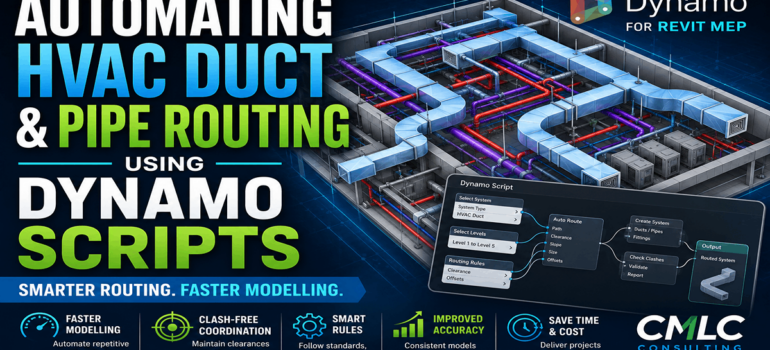
 CMLC Consulting leverages automation tools like Revit Dynamo and AI-driven BIM scripts to speed up:

  • Shop drawings
  • Quantity takeoffs
  • Schedules
  • Material lists
  • Compliance documentation

Automation reduces errors and cuts delivery time significantly.


5. 5D BIM for Faster Financial Approvals

Cost escalation is another major cause of project delays.
 CMLC’s 5D BIM services connect cost information to the BIM model in real time.

Benefits:

  • Instant BOQ extraction
  • Real-time cost estimation
  • Faster budgeting cycles
  • Improved financial transparency

This allows project owners to make decisions quickly and confidently.


6. Proactive Risk Mitigation with Predictive BIM Analytics

Before construction begins, CMLC identifies and resolves potential risks through:

  • Clash detection
  • BIM-based simulations
  • Safety walkthroughs
  • Analytical insights

Fewer surprises during execution = faster project delivery.


7. Seamless Execution Using Digital Twin Integration

Digital Twins help bridge the gap between physical construction and digital design.

CMLC offers Digital Twin workflows for:

  • Real-time site monitoring
  • Progress tracking
  • Facility optimization
  • Lifecycle planning

This enables faster, smoother project execution and closeout.


Why CMLC Consulting is the Best BIM Partner for Accelerated Delivery

CMLC stands out for:
 ✔ End‑to‑end BIM solutions
 ✔ Highly experienced engineers
 ✔ Global delivery capability
 ✔ BIM standardization expertise
 ✔ Faster turnaround through automation
 ✔ Excellence across all sectors — Residential, Commercial, Industrial, Rail, Metro, Healthcare, Data Centers, EV Plants & more

Learn more about CMLC Consulting:
 👉 ​https://www.cmlcconsulting.com


Conclusion

BIM is no longer optional—it is the backbone of faster, safer, and smarter project delivery.
 With CMLC Consulting’s BIM expertise, organizations can cut delays, minimize risks, and accelerate every stage of the project lifecycle.

For companies striving for on-time and cost-effective construction delivery, CMLC Consulting is the trusted partner leading the digital transformation of the AEC industry.

👉 Explore Services: ​https://www.cmlcconsulting.com
 👉 Contact CMLC Consulting: ​https://www.cmlcconsulting.com

Read More
How Accurate CAD Drafting Impacts Project Approvals and Compliance

How Accurate CAD Drafting Impacts Project Approvals and Compliance

How Accurate CAD Drafting Impacts Project Approvals and Compliance

Accurate CAD drafting is more than a documentation task—it’s a foundational requirement for achieving regulatory approvals, ensuring code compliance, and preventing costly project delays. In 2026’s highly technical construction landscape, authorities demand clarity, precision, and consistency in drawings. Here’s how accurate CAD drafting directly influences the approval pipeline and compliance success.


1. Accurate CAD Drafting Ensures Code‑Compliant, Approval‑Ready Drawings

Regulatory bodies scrutinize drawings for dimensional accuracy, consistency, and adherence to building codes. Even minor errors—incorrect dimensions, missing annotations, or unclear details—can result in rejected submissions and multiple revision cycles.

  • Professional CAD drafting services deliver code‑compliant, accurately formatted drawings specifically prepared for local authority submissions, helping teams achieve faster and smoother approvals.
  • Accurate sections, elevations, and construction details ensure drawings conform to local codes, reducing the likelihood of permit rejections due to miscalculations or missing details.

This level of precision minimizes ambiguity for plan reviewers and increases confidence in the proposed design.


2. Precision Reduces Revision Cycles and Shortens Approval Timelines

Every revision cycle costs valuable time. Errors in CAD drawings—such as misaligned elements, incorrect layer usage, or overlooked clashes—slow down regulatory reviews.

  • Accuracy and clarity in CAD drafting reduce the number of revision cycles required by reviewers, leading to faster approvals.
  • Standardized drawing presentation (consistent layers, naming conventions, and line weights) ensures regulators can interpret drawings quickly and reliably.

Well‑structured drawings streamline communication between project teams and reviewing authorities, preventing misunderstandings that typically lead to delays.


3. Precision Supports Compliance Throughout the Project Lifecycle

Accurate CAD drafting doesn’t just impact the approval phase—it ensures compliance across design, engineering, and construction stages.

  • Accurate 2D CAD drawings provide technically correct, dimensionally accurate layouts essential for construction, fabrication, and regulatory submission.
  • When CAD drawings reflect real‑world conditions precisely, teams avoid discrepancies during inspections, reducing non‑compliance risks at later stages.
  • Precise drafting ensures that all architectural, structural, and MEP elements align with design intent and code requirements, supporting compliance from design through execution.

This allows inspectors, contractors, and engineers to work from a shared, consistent understanding of the design.


4. Avoiding Costly Construction Errors and Legal Risks

Compliance failures due to inaccurate drawings can lead to fines, rework, halted projects, or disputes.

  • Errors in beam sizes, wall placements, and system coordination caused by inaccurate drafting can result in expensive on‑site fixes, which could have been prevented with accurate CAD checks.
  • Accurate CAD drawings enable stakeholders to identify and resolve issues early, long before approval or construction stages, minimizing legal exposure and budget overruns.

The clearer the documentation, the lower the risk of misinterpretation and compliance violations.


5. Enhanced Transparency Improves Communication With Authorities

Regulators expect clarity. Ambiguous drawings slow evaluation and raise compliance concerns.

  • Accurate CAD drawings present a universal language, improving clarity and communication among architects, engineers, contractors, and reviewers.
  • Highly precise and visually consistent drawings allow reviewers to quickly assess whether the design aligns with zoning, fire safety, and structural guidelines.

This increases trust and speeds up decision-making in the approval process.


6. Accuracy Accelerates Multidisciplinary Coordination, Strengthening Compliance

Compliance depends on all project disciplines working together without conflicts.

  • Accurate CAD drafting helps teams detect design inconsistencies early, supporting smoother coordination between architectural, structural, and MEP systems.
  • Well‑organized CAD files ensure that each discipline’s work aligns with required standards, preventing cross‑discipline clashes that often lead to non‑compliant construction documents.

Better coordination results in drawings that are easier for authorities to review and approve.


Conclusion: Accuracy is the Backbone of Approvals and Compliance

Accurate CAD drafting is indispensable for securing timely project approvals and ensuring regulatory compliance. By delivering precision, consistency, and code‑aligned documentation, CAD drafting reduces revision cycles, supports multidisciplinary collaboration, and prevents costly errors.

When drawings are accurate, authorities approve faster, stakeholders communicate better, and projects advance confidently—saving time, money, and reputation.

Read More