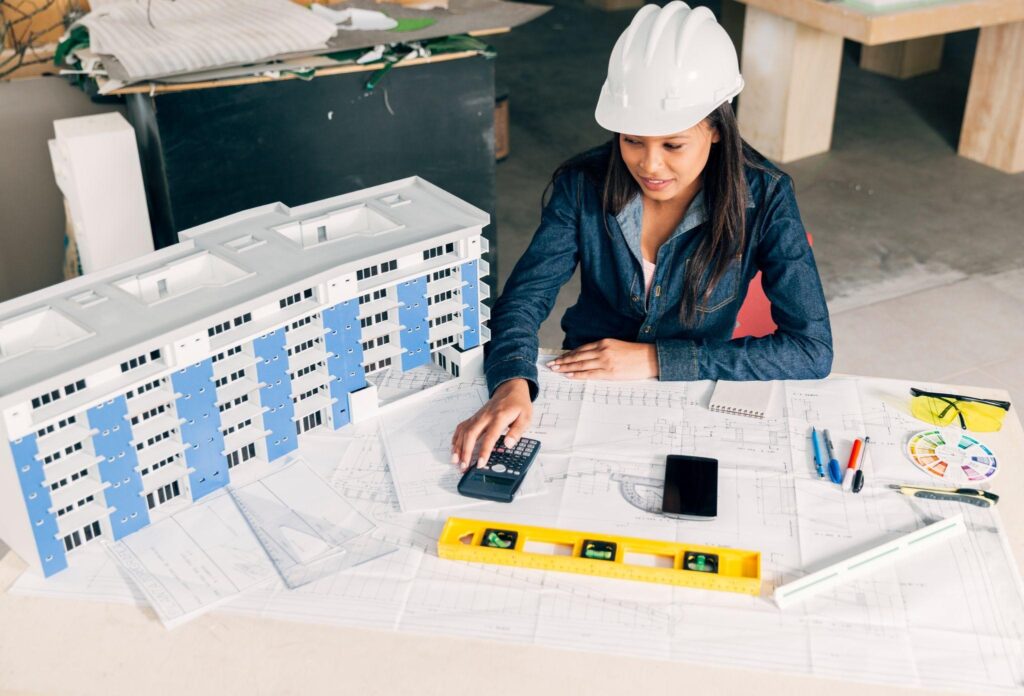
Educational infrastructure is not only about having a well-designed classroom and corridors, but it is also about setting up a flexible, sustainable, and technology-integrated environment that motivates learning and supports overall learning outcomes.
However, architects, engineers, and developers face several challenges when working on school projects, such as limited budgets, tight deadlines, strict safety requirements, and the need to complete work without disturbing ongoing classes.
Traditional 2D workflows usually lead to miscommunication between teams, design errors, and costly delays.
As a result, projects go over budget and fail to meet expectations. This is where BIM services make a difference. They transform how educational facilities are planned, designed, built, and maintained.
Understanding BIM in Educational Construction
Building Information Modeling (BIM) is a process that generates a computerized illustration of the physical and functional attributes of a structure.
This is critical in school and campus building projects. Schools and colleges have multiple spaces, classrooms, labs, auditoriums, dining rooms, and sports areas that have different structural needs.
BIM makes sure that these systems work as a unit, both in design and in the management of facilities.
1. Simplifying Complex School Construction Projects
Educational construction projects must meet strict safety, accessibility, and energy efficiency standards, often while operating within the school’s schedule.
BIM allows early-stage collaboration, enabling teams to visualize design intent, validate code compliance, and plan phased construction. This approach minimizes disruption, especially for projects that occur on active campuses.
The U.S. Department of Education emphasizes that efficient facility design directly affects learning outcomes, making BIM’s precision in planning even more valuable.
2. Clash-Free Coordination Between Disciplines
In educational buildings, systems like HVAC, fire protection, IT cabling, and structural framing often overlap. Even a minor coordination error can lead to significant rework later.
With BIM, all disciplines, such as architectural or structural, are integrated into a clash-free digital model. The software detects potential conflicts before they happen onsite. It reduces time and save materials from wasting.
3. Sustainable and Efficient School Design
Modern school design focuses on sustainability. With BIM, teams can perform energy modeling, daylight analysis, and test material performance early in the design process, leading to smarter, more eco-friendly buildings.
The U.S. Green Building Council (USGBC) emphasizes that schools with digital models attain a better LEED certification score and long-term savings.
BIM facilitates the analysis of energy consumption patterns and optimization of natural ventilation, lighting, and insulation, decreasing the energy expenses throughout the building’s lifespan and supporting the green building requirements.
4. The Improved Safety of Construction in Every Phase
When working in construction, campus safety and minimal disruption are important. BIM makes it possible to sequence construction (4D modeling) so that every construction step can be seen before it begins.
The BIM project managers will be able to consider the logistics, material movement, and risks on-site beforehand, which will allow them to implement safer construction and organize the process more effectively when the construction occurs during the teaching year.
5. Data-Driven Facility Management and Operations
All components, such as lighting fixtures, HVAC units, furniture, and safety systems, can be connected with operational data, warranty, and maintenance schedules.
Schools are also gaining an advantage with COBie-ready as-built models that enable facility teams to effectively maintain, repair, or even upgrade assets across multiple campuses.
This not only assures that schools will open on time and on budget, but also that they will be efficient over the decades.
6. Fulfilling Future Needs of Learning Spaces
The learning environment is changing fast. Classrooms are becoming more flexible and technology-driven to support new teaching methods. With BIM, it’s easier to design and plan layouts that can be expanded, rearranged, or upgraded in the future, without needing a complete redesign.
Colleges like Cambridge and districts like the Los Angeles Unified School District have already used BIM to simplify project coordination, save on energy consumption, and improve operational planning in the long term.
Conclusion
Projects in the field of education require accuracy, security, and creativity. Educational projects demand accuracy, safety and creativity, and BIM delivers all three. BIM design improves the actual performance of structural design.
To the architects, engineers, MEP contractors, and developers, BIM offers fewer surprises, improved teamwork, and smarter buildings that are helpful to the future generation of learners.
If you’re planning a new school, university, or campus facility project, CMLC Consulting can be your trusted partner. Our BIM services empower your team with data-driven insights, clash-free coordination, and lifecycle management for every phase of your project.