
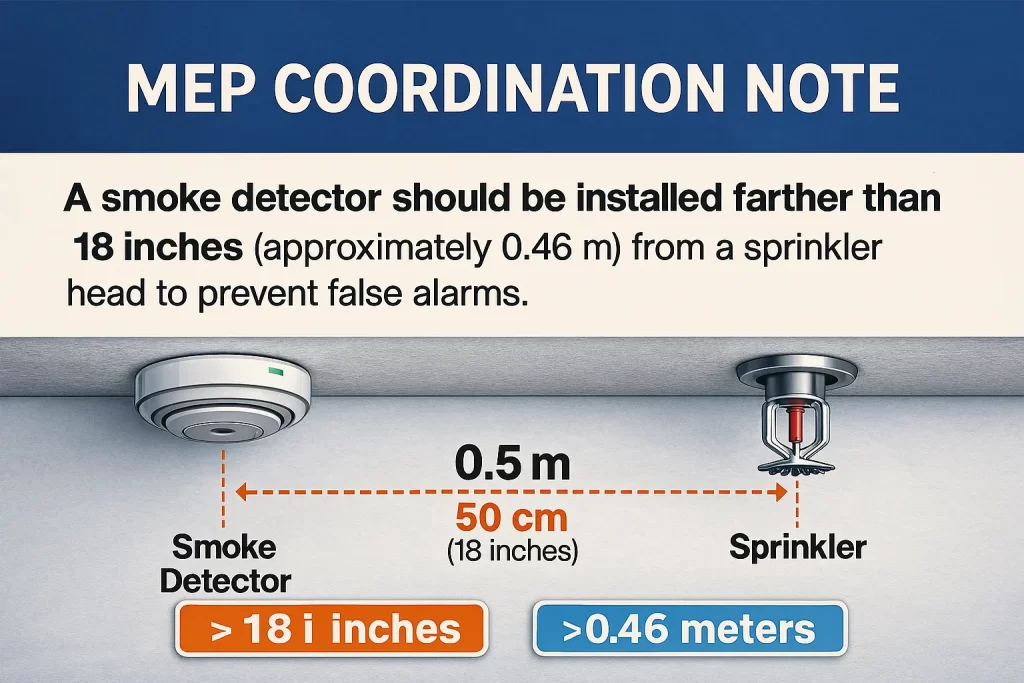
In Mechanical, Electrical, and Plumbing (MEP) design, even small coordination mistakes can lead to major functional issues during construction and occupancy. One of the most important—yet often overlooked—details is the required spacing between smoke detectors and sprinkler heads. Incorrect placement can result in false alarms, system malfunctions, or failed inspections.
This is where BIM-driven MEP Coordination plays a crucial role.
The Required Spacing: A Quick Reference
According to standard MEP coordination guidelines, a smoke detector must be installed at least 18 inches (0.46 m) away from a sprinkler head.
This spacing prevents the sprinkler’s water spray pattern or heat disturbances from affecting the detector’s performance.
Why This Distance Is Critical
- Prevents false alarms triggered by heat or water mist
- Ensures proper activation of detectors and sprinklers
- Avoids code violations during inspections
- Improves life-safety system reliability
Even a few inches of misalignment can compromise the entire safety system.
How BIM Helps Prevent These Coordination Errors
Traditional 2D drawings make it difficult to maintain accurate spacing between life‑safety devices. But BIM 3D modeling and clash detection allow teams to coordinate with far greater accuracy.
1. Visual Validation
BIM tools give a clear visual of ceiling layouts, helping designers place detectors, sprinklers, lights, and diffusers without conflicts.
2. Automated Clash Detection
Platforms like Revit and Navisworks detect spacing issues instantly—well before installation.
For advanced coordination, explore BIM Coordination Services (link can be added to your site).
3. Code Compliance Built Into the Model
MEP templates and BIM standards can include predefined spacing rules, ensuring every device meets required guidelines.
4. Faster Design Approvals
Clear 3D models reduce questions from contractors, consultants, and AHJs (Authorities Having Jurisdiction).
Why Proper MEP Coordination Matters
- Enhances safety system performance
- Reduces expensive on‑site rework
- Prevents delays caused by failed inspections
- Supports accurate quantity takeoffs and installation plans
- Ensures long‑term reliability of fire protection systems
With BIM, these benefits become achievable even in complex buildings.
Final Thoughts
Proper spacing between fire alarm devices and sprinkler heads isn’t just a design detail—it’s a lifesaving requirement. Leveraging professional BIM and MEP coordination workflows ensures that every fire safety component is installed with precision, compliance, and confidence.