
When Should You Outsource BIM Modeling Services? Key Decision Factors

When Should You Outsource BIM Modeling Services? Key Decision Factors

In the fast-paced Architecture, Engineering, and Construction (AEC) industry, firms are constantly balancing cost, quality, and timelines. Building Information Modeling (BIM) has become essential for accurate design and efficient project delivery. However, maintaining an in-house BIM team can be challenging. That’s why many firms are asking: When is the right time to outsource BIM modeling services?


1. Tight Project Deadlines

Large-scale projects often require quick turnaround times. If your internal team is overloaded, outsourcing ensures timely delivery without compromising quality. Expert providers can handle Architectural BIM Services and Structural BIM Services simultaneously, accelerating workflows.


2. Lack of Specialized Expertise

BIM involves advanced tools and standards like Revit, Navisworks, and LOD specifications. If your team lacks experience in MEP BIM Services or Scan-to-BIM Services, outsourcing to specialists guarantees accuracy and compliance.

Explore our BIM Coordination Services for multidisciplinary integration.


3. Cost Optimization

Hiring full-time BIM professionals and investing in software licenses can be expensive. Outsourcing eliminates overhead costs and provides flexibility—you pay only for what you need. Plus, accurate Construction Cost Estimation from expert teams helps prevent budget overruns.


4. Scaling for Large or Complex Projects

Mega projects often require additional resources for modeling, clash detection, and coordination. Outsourcing allows you to scale quickly without long-term commitments, ensuring smooth execution.


5. Focus on Core Competencies

Your internal team should focus on design innovation and client engagement—not get bogged down in technical modeling tasks. Outsourcing frees up time for strategic priorities while experts handle detailed BIM workflows.


Benefits of Outsourcing BIM

  • Access to global talent and advanced technology
  • Faster delivery with 24/7 support
  • Reduced risk of errors and rework
  • Compliance with industry standards (LOD 100–LOD 500)

Partner with CMLC Consulting

At CMLC Consulting, we provide end-to-end BIM solutions tailored for AEC firms. Our services include:

Ready to outsource and boost efficiency? Get a Quote today.

Read More
When Should You Outsource BIM Modeling Services? Key Decision Factors

Top BIM Challenges in Construction Projects—and How Expert BIM Services Solve Them

Top BIM Challenges in Construction Projects—and How Expert BIM Services Solve Them

Building Information Modeling (BIM) has revolutionized the construction industry, offering improved collaboration, design accuracy, and cost control. However, implementing BIM is not without challenges. Let’s explore the most common hurdles and how expert BIM services overcome them to deliver successful projects.


1. Lack of Skilled Resources

Many firms struggle to find professionals proficient in BIM tools like Revit and Navisworks. This skill gap can lead to delays and errors.

Solution: Outsource to specialists offering Architectural BIM Services and Structural BIM Services for accurate modeling and documentation.


2. Poor Coordination Between Disciplines

Uncoordinated models often result in clashes between architectural, structural, and MEP systems, causing costly rework.

Solution: Our BIM Coordination Services ensure seamless integration of all trades, reducing RFIs and change orders.


3. Inaccurate Cost Estimation

Budget overruns remain a major risk when quantity takeoffs are done manually.

Solution: Automated Construction Cost Estimation and material takeoffs keep projects financially predictable.


4. Managing Large Data Sets

Complex projects generate massive BIM data, making version control and collaboration challenging.

Solution: Expert teams use cloud-based platforms and standardized workflows to maintain data integrity.


5. As-Built Accuracy

Renovation and retrofit projects require precise existing conditions, which traditional methods fail to deliver.

Solution: Our Scan-to-BIM Services provide accurate as-built models for better planning and execution.


Partner with CMLC Consulting

We help AEC firms overcome BIM challenges with services like MEP BIM Services, Architectural & Structural BIM Modeling, and Cost Estimation. From LOD 100 to LOD 500, we ensure your BIM workflows deliver measurable ROI.

Ready to eliminate BIM challenges? Get a Quote today.

Read More
Why Your City/Country Firms Are Outsourcing BIM & CAD Services

Why Your City/Country Firms Are Outsourcing BIM & CAD Services

The Architecture, Engineering, and Construction (AEC) industry is evolving rapidly. Firms in Your City/Country are under pressure to deliver projects faster, with greater accuracy, and at lower costs. One strategy gaining momentum is outsourcing BIM and CAD services. But why is this shift happening? Let’s explore the key reasons.


1. Cost Efficiency

Hiring and maintaining an in-house BIM team can be expensive. Outsourcing eliminates recruitment, training, and software licensing costs, allowing firms to pay only for the services they need.

Discover our Construction Cost Estimation solutions that help control budgets effectively.


2. Access to Specialized Expertise

Outsourcing gives firms access to experts in BIM Coordination Services, clash detection, and constructability reviews. These specialists ensure models meet industry standards and reduce costly errors.


3. Faster Project Delivery

With dedicated teams working across time zones, outsourcing accelerates timelines. Tasks like Architectural BIM Services, Structural BIM Services, and MEP BIM Services can be completed in parallel.


4. Scalability

Whether you need Scan-to-BIM Services for renovations or MEP coordination for complex projects, outsourcing offers flexibility to scale resources up or down based on project demands.

Explore our Scan-to-BIM Services for accurate as-built documentation.


5. Focus on Core Competencies

By outsourcing technical tasks, firms can focus on design innovation, client engagement, and business growth.


Why Partner with CMLC Consulting?

At CMLC Consulting, we provide end-to-end BIM and CAD solutions tailored for AEC firms in Your City/Country. Our services include:

Ready to outsource and boost efficiency? Get a Quote today.

Read More
How Professional BIM Services Deliver Measurable Project ROI

How Professional BIM Services Deliver Measurable Project ROI

In today’s competitive construction industry, firms are under constant pressure to deliver projects faster, within budget, and with minimal errors. Professional BIM (Building Information Modeling) services have emerged as a strategic solution that not only improves design and coordination but also delivers measurable Return on Investment (ROI) across the entire project lifecycle.


What Does ROI Mean in Construction Projects?

ROI in construction isn’t just about cost savings—it includes:

  • Reduced rework and RFIs
  • Shorter project timelines
  • Improved stakeholder satisfaction
  • Long-term operational efficiency

How BIM Services Drive ROI

1. Clash Detection and Coordination

Early clash detection prevents costly on-site conflicts. Our BIM Coordination Services ensure multidisciplinary models align perfectly, reducing delays and change orders.


2. Accurate Quantity Takeoffs and Cost Estimation

Budget overruns are a major risk in large projects. With BIM, automated Construction Cost Estimation and material takeoffs keep costs predictable and transparent.


3. Enhanced Design Accuracy

Professional BIM teams deliver LOD 300–LOD 500 models, ensuring constructability and compliance. Explore our Architectural BIM Services and Structural BIM Services for precise documentation.


4. Faster Project Delivery

Parallel workflows and real-time collaboration reduce design cycles. Our MEP BIM Services and Scan-to-BIM Services accelerate coordination for complex projects.


5. Lifecycle Value

BIM models support facility management post-construction, adding long-term ROI through maintenance planning and energy optimization.


Real-World Impact

AEC firms using BIM report:

  • Up to 30% fewer RFIs
  • Significant reduction in rework costs
  • Improved schedule adherence

Partner with CMLC Consulting

We specialize in delivering measurable ROI through:

Ready to maximize ROI? Get a Quote today.

Read More
How BIM 3D Modeling Improves Design Accuracy and Constructability

How BIM 3D Modeling Improves Design Accuracy and Constructability

How BIM 3D Modeling Improves Design Accuracy and Constructability

In today’s construction industry, precision and efficiency are non-negotiable. Traditional 2D drawings often lead to misinterpretations, design conflicts, and costly rework. Enter BIM 3D Modeling—a game-changer that enhances design accuracy and ensures constructability from concept to completion.


What is BIM 3D Modeling?

Building Information Modeling (BIM) is more than just 3D visualization. It integrates geometry with rich data, enabling architects, engineers, and contractors to collaborate on a single, intelligent model.

Explore our Architectural BIM Services and Structural BIM Services for accurate design documentation.


Key Benefits of BIM 3D Modeling

1. Enhanced Design Accuracy

  • Detects clashes between architectural, structural, and MEP systems early.
  • Reduces RFIs and change orders during construction.

Learn more about our BIM Coordination Services for multidisciplinary projects.


2. Improved Constructability

  • Models include fabrication-level details (LOD 400) for shop drawings.
  • Supports prefabrication and modular construction, saving time and cost.

3. Accurate Quantity Takeoffs


4. Better Visualization for Stakeholders

  • 3D models and walkthroughs improve client approvals and decision-making.
  • Supports Scan-to-BIM Services for as-built accuracy.

Discover our Scan-to-BIM Services for renovation and retrofit projects.


Why Choose BIM Over Traditional CAD?

Unlike CAD, BIM offers:

  • Integrated data for lifecycle management.
  • Real-time collaboration across disciplines.
  • Predictable cost and schedule outcomes.

Partner with CMLC Consulting

We deliver end-to-end BIM solutions—from conceptual modeling to as-built documentation. Our expertise spans MEP BIM Services, Architectural & Structural BIM, and Cost Estimation for large-scale projects.

Ready to improve design accuracy and constructability? Get a Quote today.

Read More
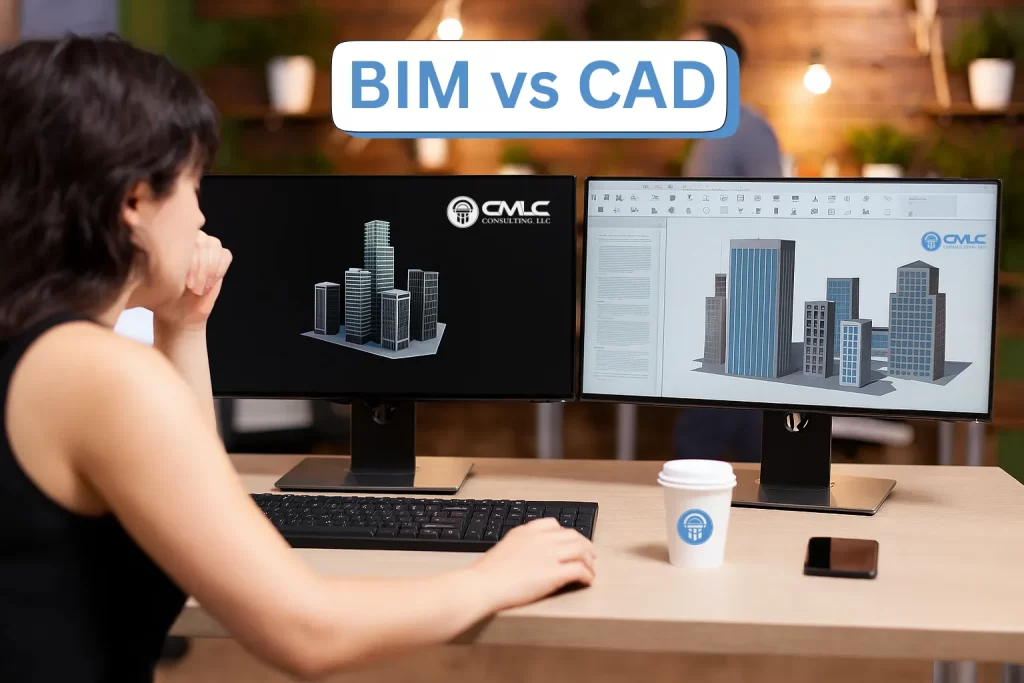
BIM vs CAD: Which Approach Delivers Better ROI for Large-Scale Projects?

BIM vs CAD: Which Approach Delivers Better ROI for Large-Scale Projects?

BIM vs CAD: Which Approach Delivers Better ROI for Large-Scale Projects?

In the Architecture, Engineering, and Construction (AEC) industry, technology drives efficiency and profitability. For decades, Computer-Aided Design (CAD) was the backbone of design workflows. Today, Building Information Modeling (BIM) is rapidly replacing CAD as the preferred approach—especially for large-scale projects. But which delivers better Return on Investment (ROI)? Let’s break it down.


What is CAD?

CAD focuses on creating 2D drawings and 3D models for design documentation. While effective for basic drafting, CAD lacks the intelligence and data integration needed for complex projects.


What is BIM?

BIM goes beyond geometry. It creates a data-rich 3D model that integrates architectural, structural, and MEP systems, enabling collaboration, clash detection, and lifecycle management.

Explore our BIM Coordination Services to see how we help firms streamline multidisciplinary workflows.


ROI Comparison: BIM vs CAD

1. Design Accuracy

  • CAD: Relies on manual coordination, prone to errors.
  • BIM: Offers clash detection and integrated models, reducing costly rework.

Learn more about Architectural BIM Services and Structural BIM Services for precise design documentation.


2. Cost Control


3. Time Savings

Discover our Scan-to-BIM Services for accurate as-built models.


4. Lifecycle Value

  • CAD: Ends at design phase.
  • BIM: Supports facility management with LOD 500 models, adding long-term ROI.

Why BIM Wins for Large-Scale Projects

  • Fewer RFIs and change orders
  • Better stakeholder communication
  • Higher predictability in cost and schedule
  • Compliance and sustainability integration

Partner with CMLC Consulting

We help AEC firms transition from CAD to BIM with services like:

Ready to boost ROI? Get a Quote today.

Read More
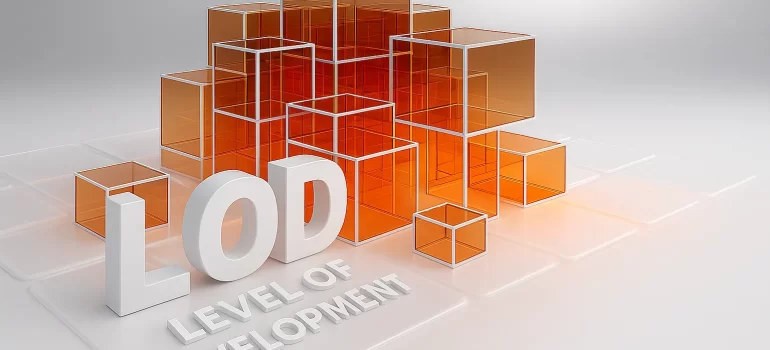
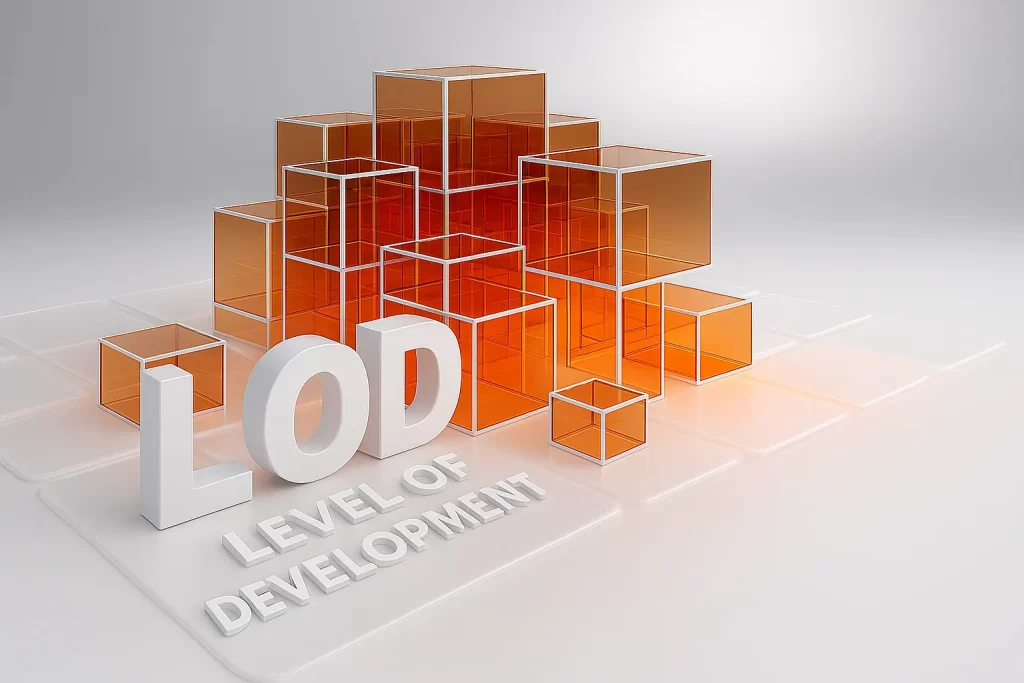
Level of Development (LOD) Explained: LOD 100–LOD 500 in BIM Projects

Level of Development (LOD) Explained: LOD 100–LOD 500 in BIM Projects

Level of Development (LOD) Explained: LOD 100–LOD 500 in BIM Projects

In the world of Building Information Modeling (BIM), clarity and precision are essential. That’s where Level of Development (LOD) comes in—a standardized framework that defines how much detail and reliability a BIM element should have at different stages of a project. Understanding LOD is critical for architects, engineers, contractors, and owners to ensure smooth collaboration and accurate deliverables.


What is LOD in BIM?

LOD refers to the degree of completeness and accuracy of a BIM element. It sets expectations for geometry, data, and documentation at each stage of design and construction. The American Institute of Architects (AIA) and BIMForum have standardized LOD into five main levels: LOD 100, 200, 300, 400, and 500.


LOD Levels Explained

LOD 100 – Conceptual

  • Represents a symbolic model with approximate geometry.
  • Used for early feasibility studies and massing.
  • Example: A placeholder for a wall without thickness or material details.

LOD 200 – Approximate Geometry

  • Elements have generic shapes and approximate dimensions.
  • Suitable for schematic design and preliminary coordination.
  • Example: A wall with estimated thickness and location but no detailed specs.

LOD 300 – Precise Geometry

  • Elements are accurately sized and located.
  • Used for detailed design and coordination.
  • Example: A wall with exact dimensions, materials, and openings.

Explore our Architectural BIM Services and Structural BIM Services for LOD 300 deliverables.


LOD 400 – Fabrication

  • Includes fabrication-level details for construction.
  • Used for shop drawings and prefabrication.
  • Example: A wall with reinforcement details and installation instructions.

Learn how our BIM Coordination Services support LOD 400 workflows.


LOD 500 – As-Built

  • Represents the final installed condition.
  • Used for facility management and lifecycle operations.
  • Example: A wall with verified dimensions and maintenance data.

Discover our Scan-to-BIM Services for accurate as-built models.


Why LOD Matters

  • Clear Expectations: Defines what information is available at each stage.
  • Better Coordination: Reduces clashes and RFIs.
  • Cost Control: Prevents over-modeling and unnecessary detailing.
  • Lifecycle Value: Supports operations and maintenance post-construction.

Partner with CMLC Consulting

We deliver BIM models at every LOD stage—from conceptual design to as-built documentation. Whether you need LOD 300 for coordination or LOD 500 for facility management, we’ve got you covered.

Get a Quote today and ensure your BIM workflows meet industry standards.

Read More
Why Engineering Firms Are Shifting to BIM-Driven Design Workflows

Why Engineering Firms Are Shifting to BIM-Driven Design Workflows

The Architecture, Engineering, and Construction (AEC) industry is undergoing a major transformation. Traditional 2D design methods are giving way to Building Information Modeling (BIM)—a collaborative, data-rich approach that streamlines design, coordination, and construction. But why are engineering firms making this shift? Let’s explore the key drivers behind BIM adoption.


1. Enhanced Collaboration Across Disciplines

BIM creates a single source of truth for all project stakeholders. Engineers, architects, and contractors can work on the same model, reducing miscommunication and design conflicts. This integrated workflow ensures that structural, MEP, and architectural elements align perfectly.

Explore our BIM Coordination Services to see how we help firms achieve seamless collaboration.


2. Improved Design Accuracy

With BIM, engineers can visualize complex systems in 3D, detect clashes early, and optimize layouts before construction begins. This proactive approach minimizes costly rework and delays.

Learn more about Architectural BIM Services and Structural BIM Services for precise design documentation.


3. Cost and Time Savings

BIM-driven workflows enable accurate quantity takeoffs and cost estimation, helping firms stay within budget. Automated updates ensure that any design change instantly reflects in schedules and cost plans.

Discover our Construction Cost Estimation solutions that keep your projects financially on track.


4. Better Project Visualization

Clients and stakeholders can experience the design through 3D models and virtual walkthroughs, improving decision-making and reducing approval cycles.


5. Compliance and Sustainability

BIM supports code compliance checks and energy analysis, helping firms meet regulatory standards and sustainability goals.


Why Partner with CMLC Consulting?

At CMLC Consulting, we specialize in BIM-driven workflows that empower engineering firms to deliver projects faster, smarter, and more cost-effectively. From Scan-to-BIM Services to MEP coordination, we provide end-to-end solutions tailored to your needs.

Ready to transform your design process? Get a Quote today.

Read More
Outsourcing BIM & CAD Services: A Strategic Advantage for AEC Firms

Outsourcing BIM & CAD Services: A Strategic Advantage for AEC Firms

In today’s fast-paced construction environment, Architecture, Engineering, and Construction (AEC) firms face mounting pressure to deliver projects faster, with greater accuracy, and at lower costs. One proven way to achieve these goals is outsourcing BIM and CAD services. This strategic move not only optimizes resources but also enhances project outcomes.


Why Outsource BIM & CAD Services?

Outsourcing allows AEC firms to tap into specialized expertise without the overhead of maintaining large in-house teams. Here are the key benefits:

1. Cost Efficiency

Maintaining a full-time BIM team can be expensive. Outsourcing eliminates recruitment, training, and software licensing costs, enabling firms to pay only for the services they need.

2. Access to Expertise

Specialized BIM service providers bring deep knowledge of BIM Coordination Services, clash detection, and constructability reviews. This ensures models meet industry standards and reduce costly errors during construction.

3. Faster Turnaround

With dedicated teams working across time zones, outsourcing accelerates project timelines. Tasks like Architectural BIM Modeling and Structural BIM Services can be completed in parallel, improving efficiency.

4. Scalability

Whether you need Scan-to-BIM for renovations or MEP coordination for complex projects, outsourcing offers flexibility to scale resources up or down based on project demands.


Strategic Impact on AEC Firms

Outsourcing is not just about cost savings—it’s about strategic advantage:

  • Improved Accuracy: Advanced tools and QA processes minimize clashes and RFIs.
  • Focus on Core Competencies: Internal teams can concentrate on design innovation and client engagement.
  • Global Talent Access: Leverage experts proficient in tools like Revit, Navisworks, and BIM 360.

How CMLC Consulting Adds Value

At CMLC Consulting, we specialize in delivering end-to-end BIM solutions tailored for AEC firms. Our services include:

Explore our Projects to see how we’ve helped leading firms streamline workflows and deliver exceptional results.


Ready to Outsource? Let’s Talk!

Outsourcing BIM and CAD services can transform your project delivery. Get a Quote today and discover how CMLC Consulting can become your trusted partner in building smarter.

Read More
How Professional BIM Services Reduce Construction Cost Overruns

How Professional BIM Services Reduce Construction Cost Overruns

How Professional BIM Services Reduce Construction Cost Overruns

Cost overruns remain one of the most persistent challenges in the construction industry. Unplanned expenses not only impact profitability but can also delay schedules, damage client trust, and create disputes among project stakeholders. As construction projects become more complex, relying on traditional workflows and disconnected documentation increases financial risk. This is where professional BIM (Building Information Modeling) services play a critical role in controlling costs and improving project outcomes.

How BIM Services Help Control Costs

Professional BIM services address these challenges by creating a collaborative, data-driven project environment.

1. Clash Detection and Trade Coordination
One of the most powerful advantages of BIM is early clash detection. BIM coordination services identify conflicts between architectural, structural, mechanical, electrical, and plumbing systems during the design stage. Resolving clashes before construction begins prevents expensive rework, material waste, and schedule of disruptions on site.

2. Accurate Quantity Takeoffs and Cost Planning
BIM-based quantity takeoffs provide precise material quantities directly from the model. Unlike manual methods, BIM-driven takeoffs reduce human error and ensure estimates are aligned with the actual design. This accuracy helps contractors and owners manage procurement costs and avoid budget surprises.

3. Improved Design Accuracy and Constructability
Architectural, structural, and MEP BIM modeling services deliver highly detailed and constructible models. These models reduce ambiguities in drawings, minimize change orders, and support better planning throughout the construction phase.

4. Better Communication and Decision-Making
Centralized BIM models serve as a single source of truth for all stakeholders. Designers, contractors, and owners can collaborate more effectively, respond faster to design changes, and make informed decisions that keep costs under control.

Conclusion

By improving coordination, accuracy, and transparency, professional BIM services significantly reduce the risk of construction cost overruns. Investing in BIM early in the project lifecycle leads to better cost control, fewer surprises, and more successful project delivery.


Partner with CMLC Consulting

Don’t let cost overruns derail your next project. Get a Quote today and discover how our BIM expertise can save you time and money.


Read More