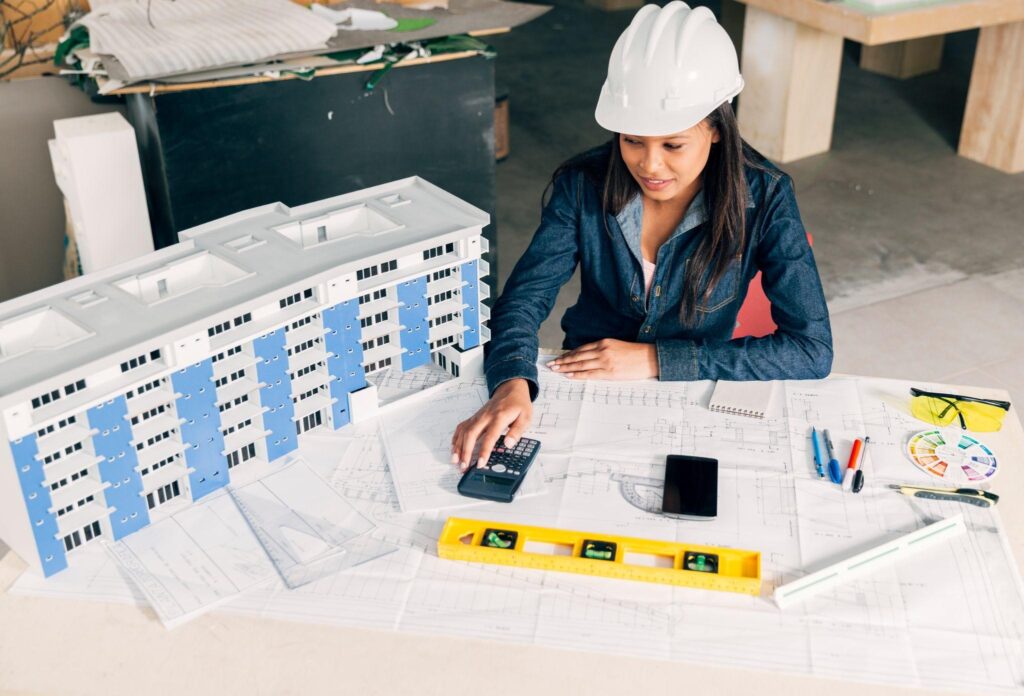
You can imagine how frustrating it can be when you walk into an old building with missing blueprints or when you are trying to plan a renovation project and have no correct drawings. The challenge of having to work with outdated or missing as-built documentation is a challenge many business owners, architects, and MEP contractors face.
That is where Scan to BIM (Building Information Modeling) fits in to revolutionize the process of capturing, modeling, and managing building data.
Learn Scan to BIM
Scan to BIM This is the procedure of applying the technology of 3D laser scanning to obtain accurate data of an existing structure and then converting it into a smart Building Information Model. Millions of data points, or point cloud, are captured by the laser scanner, and this is an accurate reflection of the geometry of the building.
This computerized information is then translated into BIM technology software (like Revit) and it is converted into an elaborate 3D map that depicts the precise conditions of the space.
Scan to BIM just fills in the gap between the real and the virtual world and provides you with a model that is as real as the building itself.
The Failures of Classic Methods in this
Classic conventional site surveys, manural measurements, or old 2D CAD drawings are not always able to get the full picture. Even a minor difference may cause in complicated or aging buildings:
- Construction rework and design mistakes.
- Incorrect planning leads to cost overruns.
- Delay due to unexpected conflicts.
- Risks in the course of renovation or retrofit.
In construction, facility management, and engineering industries, accuracy is all that matters. Scan to BIM removes the element of guesswork, so that all stakeholders, such as architects, MEP contractors, etc, are operating with the same model, which is both reliable and rich in data.
How the Process Works
An average scan to BIM process includes:
- 3D Laser Scanning: 3D Laser Scanning: Laser scanners with high resolution scan spatial information on the interior and exterior surfaces of the building..
- Point Cloud Processing: The raw data is registered and aligned to form a complete digital representation of the structure.
- Model Creation: Skilled BIM technicians interpret the point cloud to create an accurate 3D model in software like Autodesk Revit.
- Quality Assurance: The model is checked against the real-life dimensions and all the pipes, beams, and walls are exactly in position.
The Practical Scan to BIM Advantages
1. Increased Design Accuracy
To architects scan to BIM gives a reliable digital basis to base their design on. It removes uncertainty, enabling teams to see the existing structure, examine situations and make wise design choices.
2. Cost and Time Efficiency
The cost of rework due to incorrect drawings can be very high. In Scan to BIM, the teams minimize errors at an early stage, which results in huge cost savings and quick delivery of projects.
3. Improved Collaboration
Collaboration can be enhanced when all the people, including designers and contractors, work with the same correct model.
Clash detection tools can identify design conflicts at an early stage reducing the number of problems on the site and enhances the coordination of MEP systems and structural components.
4. Reliable As-Built Documentation
Facility managers and building owners get an accurate list of their assets. Continuous maintenance, renovations, or expansions can be done with this digital twin, which will provide value in the form of long-term operations..
Scan to BIM for Future Ready Construction
As the construction industry moves toward digital transformation, Scan to BIM is no longer a luxury but a necessity. Visualization, analysis, and control of a building in a virtual environment prior to making physical modifications enable teams to work smarter, rather than harder.
This technology equips your organization with the future of the construction and the management of assets.
Make Your Current Spaces Smart with CMLC Consulting
When thinking of renovating, expanding or audit of facilities, using old 2D drawings can cause unnecessary risks and costs. Scan to BIM gives you the clarity, precision, and the confidence to proceed with it and data that really represents the reality of your building. At CMLC Consulting, we deal in the accurate Scan to BIM services that are offered in accordance to the requirements of architects, contractors, and building owners. Call us today for a free quote!