Delays, reworks, and cost overruns are common in construction projects due to a lack of proper coordination. And numerous architects, engineers, and contractors waste nights and days trying to correct the issues that might have been identified at the first stage. Conventional 2D drawings complicate the ability to visualize the complex system, and that creates the problem of miscommunication between the teams and the managers.
This is the place where Revit 3D modeling transforms the game by providing an intelligent, quicker, and more economical project delivery method.
What Is Revit 3D Modeling?
Revit modeling 3D is a Building Information Modeling (BIM) application that provides professionals with the ability to design data-enriched digital models of a building. In contrast to the traditional CAD that concentrates on lines and shapes, Revit models are filled with real-world data such as materials, dimensions, and building parts.
All the components in a Revit model are linked. Where one element is changed, the other components are updated automatically..
Increased Automation of Projects
Automation is one of the greatest benefits of Revit 3D modeling, as it facilitates efficient workflows.
Repetitive design tasks such as placing components, generating schedules, or updating floor plans are automated, saving hours of manual work. The engineers and architects can concentrate on the optimization of the design rather than drawing layouts each time there is a change.
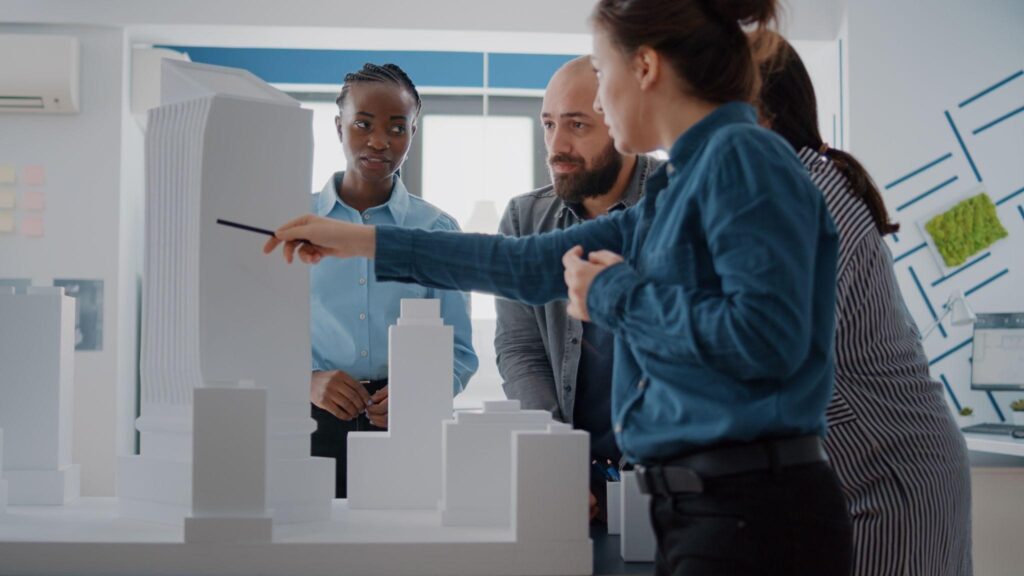
Revit also encourages real-time work. There may be multiple teams, structural, architectural, and MEP teams, which can be simultaneously involved in the same model on a shared platform. This integrated environment allows everyone to see updates instantly.
During a team collaboration on Revit, any design conflicts like pipe clashes or duct interferences are spotted at an early stage to avoid reworking.
Decreasing Design Errors and Rework Costs
One of the largest causes of time and money wastage in building construction is design errors. Such mistakes may not be noticed during the working stage until the building stage becomes costly to repair.
The clash detection features of Revit can be used to detect these conflicts at the design phase. It could be a duct that crosses a beam or electric cables in conflict with structural elements, and they can be visualized and sorted out before a single brick has been laid.
Revit model accuracy minimizes change orders, wastage of materials, and delays during the project.
Improved Cost Estimation and Management
Revit 3D modeling is more than a design visualization; it aids in cost management. Each model element of Revit has data, including the type, the quantity, and the size of a material. The number of quantity takeoffs and material schedules may be produced automatically, enabling estimators to obtain costs in a quick and precise manner.
This accuracy aids the decision-makers in managing the budgets and planning the purchases more efficiently. It also minimizes cases of over-ordering or shortages of material that frequently contribute to project delays.
Better Visualization and Client Communication
Most projects experience misalignment between the expectations of the client and the real design. This is where 3D modeling of Revit comes in and offers highly realistic visualizations. The virtual model allows the stakeholders to view the model, give design input, and make wise choices before construction is undertaken.
This visual clarity not only enhances client confidence but also reduces design revisions later. For developers and owners, it offers faster approvals, fewer design disputes, and smoother project execution.
Streamlined Facility Management After Construction
The value of Revit 3D modeling extends beyond project completion. The model serves as a digital twin, a living record of the building’s components, systems, and maintenance data.
Facility managers can use this model for future renovations, system upgrades, or energy audits without relying on outdated 2D drawings.
Why Revit 3D Modeling is a Smart Investment
All the hours saved in the coordination, all the conflicts avoided, and all the change orders minimized have a direct influence on the profitability of a project. The intelligent modeling environment provided by Revit makes informed decisions and enables design teams to optimize workflow and deliver projects on time and within the budget.
To the decision-makers of the construction field, the implementation of Revit 3D modeling is not only a question of keeping pace with technology, but also a question of enhancing the efficiency of the project and the sustainable ROI.
Build Smarter with CMLC Consulting
Revit 3D modeling is redefining how construction projects are designed, managed, and delivered. By integrating all disciplines into a single intelligent model, it eliminates inefficiencies and enables teams to build better and faster.
If you want to reduce the risks, time, and costs in the next project, collaborate with CMLC Consulting. Our specialists are excellent in Revit services and integrating BIM according to your business requirements.